As people move through different stages of life, there are new financial opportunities and potential pitfalls around every corner. Here are common money mistakes to watch out for at every age.
The U.S. Small Business Administration is increasing the maximum amount small businesses and non-profit organizations can borrow through its COVID-19 Economic Injury Disaster Loan (EIDL) program. Starting the week of April 6, 2021
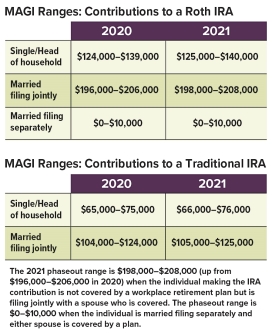
Every year, the Internal Revenue Service announces cost-of-living adjustments that affect contribution limits for retirement plans and various tax deductions, exclusion, exemption, and threshold amounts. Here are a few of the key adjustments for 2021.
In March 2020, Congress passed the Coronavirus Aid, Relief, and Economic Security (CARES) Act. The legislation included a provision that allowed qualified retirement plan participants and IRA account holders to take penalty-free early distributions totaling no more than $100,000 between January 1 and December 31, 2020. If you took advantage of this measure, here's what you need to know for tax filing.
You'll need these records whether you're preparing your own return or paying someone else to prepare your tax return for you.
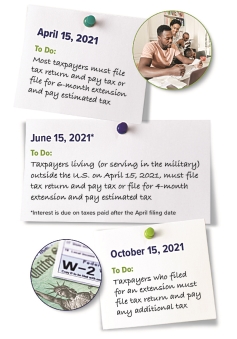
Don't procrastinate. The filing deadline for individuals is generally Thursday, April 15, 2021.
If we've learned any lesson over the past year, it's that no matter how carefully we plan and prepare, we'll likely encounter unexpected hurdles. While a global pandemic has certainly underscored the need to pay close attention to our physical wellness, it has also revealed the need to shore up our financial wellness.
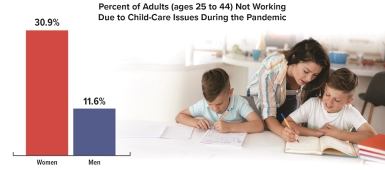
According to the U.S. Census Bureau, around one in five working-age adults (ages 18 to 64) with children said the reason they were not working was because COVID-19
Are Value Stocks Poised for a Comeback?
Growth stocks have dominated the market for the last decade, led by tech giants and other fast-growing companies. While it's possible this trend may continue, some analysts think that value stocks may have strong appeal during the economic recovery.1
COVID-19 Targeted EIDL Advance was signed into law on December 27, 2020, as part of the Economic Aid to Hard-Hit Small Businesses, Non-Profits, and Venues Act. The Targeted EIDL Advance provides businesses located in low-income communities with additional funds to ensure small business continuity, adaptation, and resiliency.